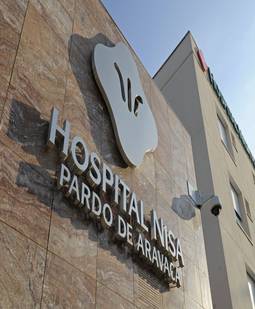
A modern (opened in 2007), general, private hospital located in Madrid, part of the NISA group of hospitals. The international patients department can assist patients with accomodation and trasportation, and can communicate in English as well as in Spanish.
At HM Sanchinarro Hospital, they offer a comprehensive service to attend to your heart problems. Their cardiology unit includes: Clinical Cardiology, Heart Failure and Arrhythmias.
Quirón has an internationally prestigious medical staff, the largest in the sector, and is also the principal hospital network in terms of patient numbers and care facility area. The group administers 47 healthcare centers, more than 4.000 hospital beds and 8.000 doctors
An ISO certified modern private hospital, which was opened in 2006, and is part of the Quironsalud Hospital Group. This tertiary care hospital has certified medical specialties capable of treating the most complicated medical cases.
HM Hospitales is a hospital group with six private hospitals in Madrid: three general hospitals, a cardiovascular hospital, an oncological center and a women's health hospital.
This is a subspecialty of cardiology that focuses on diseases and conditions of the heart and circulatory system which affect infants, children, and adolescents. Medical doctors who specialize in this specialty are known as pediatric cardiologists.
Anomalous Left Coronary Artery From the Pulmonary Artery
Coarctation of the Aorta
Interrupted Aortic Arch
Double-Chambered Right Ventricle
Congenital Mitral Stenosis
Partial Anomalous Pulmonary Venous Connection
Coronary Artery Fistula
Double Orifice Mitral Valve
Valvar Pulmonary Stenosis
Double Outlet Right Ventricle With Normally Related Great Arteries
Velocardiofacial Syndrome
Double Aortic Arch
Coronary Artery Anomalies
Double Outlet Right Ventricle With Transposition
Endocardial Fibroelastosis
Heterotaxy Syndrome and Primary Ciliary Dyskinesia
High Altitude Pulmonary Hypertension
Infundibular Pulmonary Stenosis
Williams Syndrome
Junctional Ectopic Tachycardia
Muscular Ventricular Septal Defect
Ostium Primum Atrial Septal Defects
Pediatric Atrial Ectopic Tachycardia
Pediatric Atrial Flutter
Truncus Arteriosus
Ventricular Inversion
Pediatric Aortic Valve Insufficiency
Ventricular Septal Defects
Devices used in pediatric cardiology
Stethoscope: This is an acoustic device which the pediatric cardiologist uses to listen to the internal sounds such as heart sounds. It can also be used to listen for bowel sounds, lung sounds and bruits (renal and carotid).
EKG calipers: This is a device used to measure intervals and also compare intervals on EKGs.
Pacemaker: This is an electrical device which is implanted to replace the natural pacemaker of the heart.
Defibrillator: This is an electrical device which alters the heart’s rhythm using electrical energy. It is used to top fibrillation of the heart.
Diagnostic tests and procedures
Echocardiogram: – a sound wave picture to check the structure and function of the heart.
Ambulatory ECG: This is a test, which is done during activity to look for any abnormal heart rhythms.
Exercise test: This is a test to measure if the heart is functioning well.
Cardiac Catheterization: This test involves placing a small tube (catheter) in or near the heart for closer observation. It can also e used to relieve the blockage.
Blood tests: This includes testing the levels of cholesterol, Creatine kinase, and Troponin .
Echocardiography (echo): This test inspects the heart’s chambers and blood flow.
Transthoracic echocardiogram (TTE): This is an echocardiogram of the heart via the thorax. It is a noninvasive procedure and takes a short time.
Transesophageal echocardiogram (TEE): This is an echocardiogram of the heart through the esophagus. It can require general anesthesia or sedation.
Cardiovascular magnetic resonance imaging (CMR): An MRI of the heart utilizes the ECG to observe specific mechanical functions of the heart.
Auscultation: This test involves listening to sounds such as heart sounds using a stethoscope.
Electrocardiography (ECG or EKG): This test measures the electrical activity of the heart using electrodes which are placed on the skin.
Why see a pediatric cardiologist?
Pediatric cardiologists are specially trained and have the expertise needed to treat children. They know how to talk to the children making them feel relaxed. In addition, their offices are decorated with cartoon characters and toys and games to make the children relaxed.
О процедуре: Педиатрическая кардиология
Главное для планирования лечения: длительность, пребывание в больнице, анестезия, риски и восстановление.
Восстановление
Информация скоро появится. Запросите консультацию, чтобы получить индивидуальные рекомендации по восстановлению. Узнать цену →
Послеоперационный уход
Информация скоро появится. Запросите консультацию, чтобы получить индивидуальные рекомендации по восстановлению. Узнать цену →

 Private Hospital
 ISOЦена по запросу




 JCI